
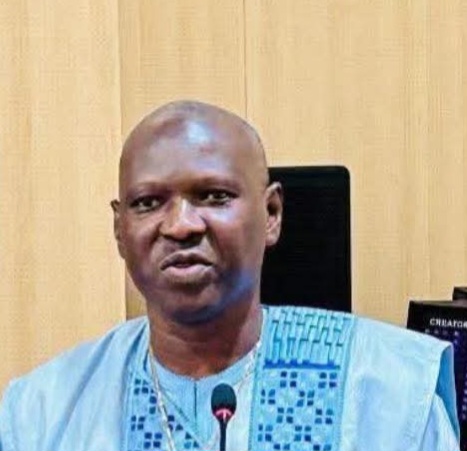
Addressing Gambians and stakeholders in the electoral process, Colley described the exercise as a critical step in preparations for upcoming national polls, including the presidential election scheduled for early December 2026 and the National Assembly and local government elections expected in the first quarter of 2027.
“The supplementary voter registration is an important milestone in the electoral process and a prelude to the various elections that will follow,” Chairman Colley said, noting that the exercise will contribute to consolidating democracy and ensuring the enfranchisement of eligible citizens.
The IEC has deployed 100 registration teams across the country to carry out the exercise at 730 registration centers nationwide. The teams consist of trained electoral personnel equipped with the Commission’s voter registration software and equipment and familiar with the relevant legal guidelines governing the process.
According to the Commission, the 2026 exercise will serve as an addition to the 2021 Voter Register. It is intended to provide an opportunity for Gambians who have attained the age of 18, or who will turn 18 by December 5, 2026, as well as those who missed the 2021 registration, to enroll and participate in the current electoral cycle.
Chairman Colley urged all eligible citizens to take advantage of the exercise when registration teams arrive at their designated centres, noting that schedules for team movements have been widely circulated through the media and other stakeholder channels.
Under the provisions of the Elections Act 2025, prospective voters must present one of the following documents to qualify for registration: a birth certificate, a national identity card, a Gambian passport, or an attestation from an Alkalo or Seyfo confirming Gambian citizenship.
The IEC chairman stressed that the process will be conducted in strict compliance with the law to safeguard the integrity and credibility of the voter register.
“Attempts to fraudulently register or engage in double registration are offenses and will be dealt with in accordance with the relevant provisions of the law,” he warned, emphasizing that the principle of “one man, one vote” will be strictly upheld.
The Commission also announced that registered voters who wish to transfer to new voting locations can do so during the supplementary registration period at IEC election offices across the country. In addition, voters whose cards have been lost, damaged, or destroyed will be able to obtain replacements free of charge at registration centres within the regions where they were originally registered.
Chairman Colley said political party agents, registration officers, and members of the media will monitor the process to ensure transparency, integrity, and compliance with legal procedures.
He reaffirmed the IEC’s commitment to delivering a free, fair, transparent, and credible voter registration exercise while thanking stakeholders for their continued cooperation and engagement.
“As a public institution accountable to the Gambian people, the Commission reaffirms its principles of fair play, integrity, and transparency,” Chairman Colley said, adding that the IEC remains open to consultations with stakeholders throughout the exercise.
He concluded by wishing the electorate and all stakeholders a peaceful and successful voter registration exercise.
About the Author